Choosing a tarp based only on a “heavy duty” label can lead to leaks, early tears, or needless cost. A better approach starts with GSM, which means grams per square metre. It shows the tarpaulin weight per square meter, but it does not measure physical thickness on its own.
This tarpaulin GSM guide explains common weight ranges, material choices, and uses for agriculture, trucks, construction, and storage. You will also learn which specifications matter beyond weight and what to ask a supplier before ordering.
What Does Tarpaulin GSM Mean?
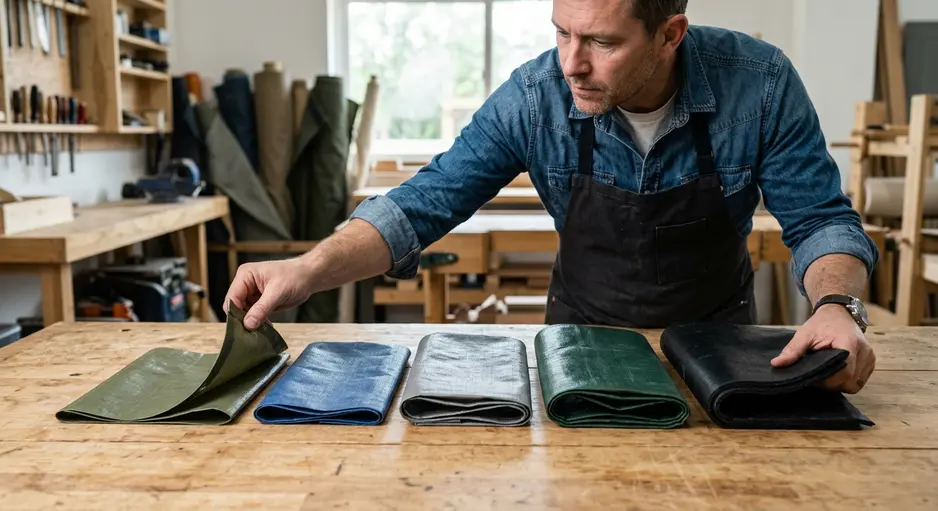
GSM Measures Material Weight, Not Just Thickness
GSM stands for grams per square metre. In simple terms, one square metre of a 200 GSM sheet weighs about 200 grams. Actual weight may vary within the manufacturer’s stated tolerance.
Ask whether the quoted value applies to the finished coated product or only its base fabric. Coatings, lamination, edge ropes, eyelets, and corner patches may affect the final weight without being part of the fabric’s stated GSM.
Is GSM the Same as Tarpaulin Thickness?
No. GSM and thickness are different measurements. Tarpaulin fabric thickness may be shown in millimetres or microns. GSM measures material weight across a set area.
Yarn size, fabric density, resin type, woven fabric structure, and coating thickness all affect the link between weight and thickness. As a result, two 200 GSM products may feel and perform quite differently. There is no reliable universal formula for converting GSM into millimetres.
How Is Tarpaulin GSM Measured?
A sample of known area is cut, conditioned when required, and weighed. Its mass is then converted into grams per square metre. ISO 2286-2 provides an established method for measuring the total mass per unit area of coated fabrics.
For a fair comparison, request a technical data sheet that lists the test method and manufacturing tolerance.
Tarpaulin GSM Chart: Light to Heavy Duty
The following tarpaulin GSM chart is a practical starting point, not a universal specification. Material type and product construction can change performance within every range.
- Below 100 GSM — Lightweight: Suitable for indoor dust covers, painting, and brief protection. It is easy to handle but has limited puncture and wind resistance.
- 100–150 GSM — Light to medium duty: Often used for garden covers , camping, temporary storage, and seasonal work. Check UV treatment and eyelet reinforcement.
- 150–250 GSM — Medium to heavy HDPE: A common starting range for agriculture, outdoor storage, and construction covers. It offers a useful balance of handling, durability, and cost.
- 250–400 GSM — Extra heavy duty: Used for reusable covers and industrial protection. Fabric construction becomes especially important in this range.
- 400–650 GSM — Heavy PVC-coated fabric: Often considered for machinery covers, construction screens, and some truck applications. Review seams, coating quality, and tensile strength.
- 650–900+ GSM — Industrial heavy duty: Intended for demanding transport, repeated handling, and specialised outdoor covers. These products are heavier and harder to move.
Why GSM Ranges Overlap
HDPE, PVC, canvas, and other materials do not perform the same way at an equal weight. A well-made lower-GSM sheet may outlast a heavier product with a weak weave or poor coating.
Hems, welded seams, corner patches, and reinforced eyelets also influence sheet durability. Many failures begin at fixing points rather than in the middle of the tarp.
HDPE vs PVC Tarpaulin GSM
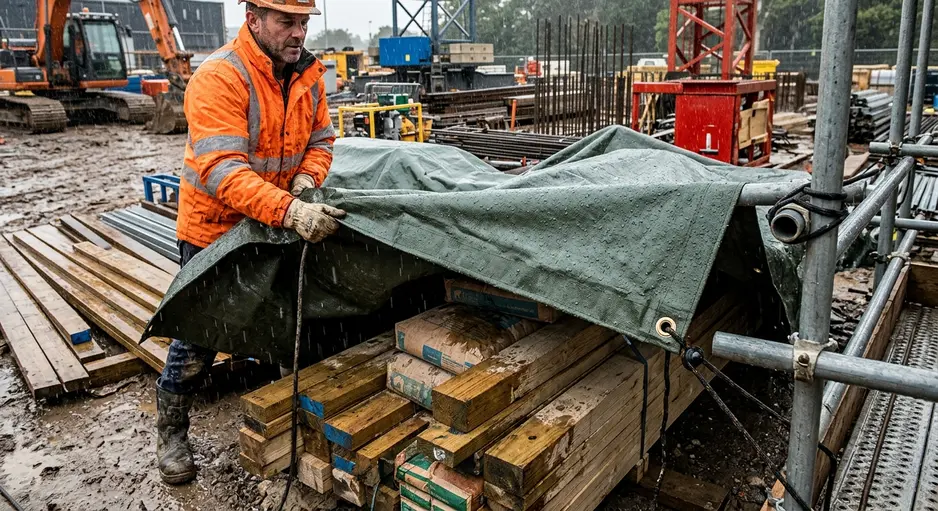
HDPE Tarpaulin and Woven Construction
HDPE tarpaulins normally have a woven polyethylene fabric with laminated or coated surfaces. They are light, flexible, water-resistant, and economical. Common uses include farm covers, storage sheets, temporary construction protection, and general outdoor covering.
UV stabilisation is important when polyethylene fabric will remain in direct sunlight. Weight alone does not confirm UV resistance.
PVC Tarpaulin and Coating Thickness
PVC coated fabric is usually heavier. It can provide good abrasion resistance, weldability, and outdoor covering performance when made for demanding conditions. It is often used for trucks, machinery, industrial curtains, and reusable covers.
Which Material Should You Choose?
- Choose HDPE when low weight, easy handling, broad coverage, and short- to medium-term use are priorities.
- Choose PVC when you need repeated handling, welded fabrication, abrasion resistance, or a longer working life.
Neither material is best for every job. Base the decision on exposure, handling, required lifespan, and verified test data.
How to Choose Tarpaulin GSM by Application
The ranges below are starting points only. They should not replace project specifications, safety rules, or advice based on the actual site.
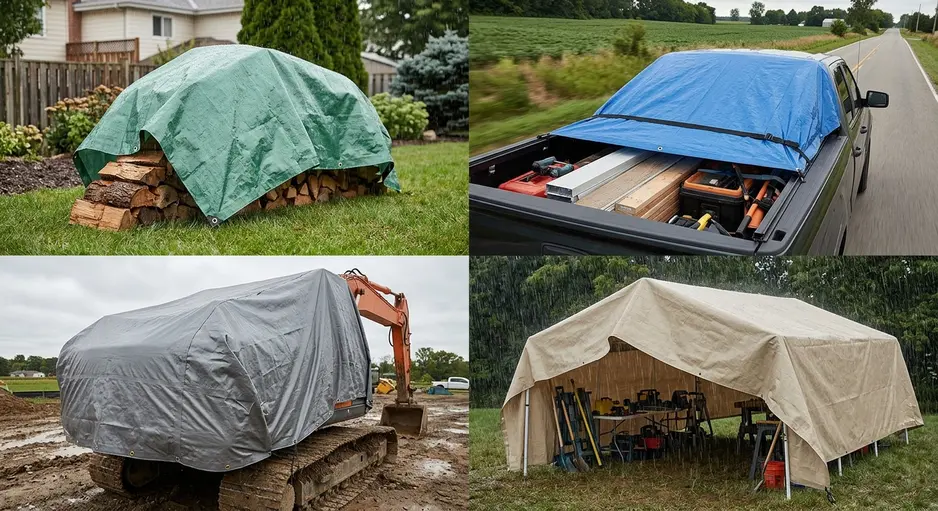
Tarpaulin GSM for Agriculture
About 120–250 GSM HDPE may suit crop covers, hay protection, equipment covering, and general farm storage. For long outdoor exposure, focus on UV resistance, secure edges, waterproofing performance, and resistance to wind-driven flapping.
Grain-floor sheets, pond liners, silage covers, and rain covers serve different purposes. They may need different constructions even when their material weight is similar.
Tarpaulin GSM for Trucks
Heavy PVC-coated products around 550–900 GSM are often considered for repeated transport use. The final choice depends on highway wind, abrasion, welding, cover design, attachment points, and applicable fleet or legal rules.
A truck tarp is not a substitute for a certified load-restraint system. Cargo must be secured using methods approved for the vehicle and load.
Tarpaulin GSM for Construction
Temporary rain, dust, or debris covering may use sheets around 120–250 GSM. Reusable partitions, screens, and equipment covers may require reinforced HDPE or heavier PVC fabric. Check whether the project requires certified flame-retardant material.
Tarpaulin GSM for Storage
Indoor dust protection may need only 80–120 GSM. Covered or short-term outdoor storage often starts around 120–200 GSM. Long-term exposed storage may call for 200 GSM or more, along with strong UV treatment, secure anchoring, and abrasion protection.
Does Higher GSM Mean a Stronger Tarpaulin?
Usually, but not always. More material can improve durability, yet GSM does not reveal how well that material has been woven, coated, reinforced, or fabricated.
Waterproofing and Seam Quality
No single waterproof tarpaulin GSM guarantees a dry cover. Water protection depends on coating continuity, pinholes, surface finish, seams, and penetrations around eyelets.
Welded seams may provide better water control than untreated stitching when they are made correctly. For critical uses, ask for hydrostatic pressure results based on a recognised method such as ISO 811 or AATCC 127.
Tensile Strength and Tear Resistance
Tensile strength shows how a fabric resists pulling forces. Tear resistance shows how well it stops a cut or puncture from spreading. ISO 1421 covers tensile testing for coated fabrics, while ISO 4674-1 covers tear testing.
These results offer more useful evidence than terms such as “premium” or “heavy duty.” ASTM D751 also includes test methods for several coated-fabric properties.
UV, Weather, and Reinforcement
Sunlight, heat, cold, moisture, chemicals, and constant movement can weaken a tarp. UV stabilisation should be verified rather than assumed from its colour or weight.
Also inspect hem construction, rope reinforcement, weld strength, eyelet spacing, and corner patches. Strong attachment areas help spread wind loads and reduce local tearing.
Tarpaulin GSM Selection Checklist
Five Steps for Choosing the Right GSM
- Define the job: Decide whether you need a dust cover, weather sheet, farm cover, transport tarp, or industrial barrier.
- Estimate duration: Separate one-time use from seasonal or continuous exposure.
- Assess stress: Consider wind, rain, sunlight, abrasion, chemicals, and temperature.
- Select the material: Compare lightweight HDPE with heavier PVC-coated options.
- Check verified data: Review GSM, thickness, tensile strength, tear resistance, coating, reinforcement, and warranty terms.
Questions to Ask a Supplier
- Does the stated GSM apply to the finished fabric?
- What manufacturing tolerance is allowed?
- Are tensile and tear test results available?
- Is the material UV-stabilised?
- Is it waterproof or only water-resistant?
- What coating and base fabric are used?
- Are welded seams, custom sizes, reinforced hems, or custom eyelet patterns available?
Before a large order, request a sample and technical data sheet. A sample can also be weighed by cutting a measured area and using an accurate scale. Compare products made from similar materials and constructions rather than relying on GSM alone.
Choose Performance, Not GSM Alone
GSM is a useful comparison metric, but it is not a complete measure of tarpaulin thickness, strength, or waterproofing. Match the material weight with the weave, coating, reinforcement, test results, and real working conditions.
Need help selecting the right tarpaulin GSM? Contact Shadoflex with your required dimensions, application, exposure conditions, and expected service life to discuss a suitable material specification.
Frequently Asked Questions About Tarpaulin GSM
1. What GSM Is Best for a Waterproof Tarpaulin?
No single weight guarantees waterproofing. For general outdoor use, 150–250 GSM HDPE can be a practical starting point. Repeated or demanding use may need heavier PVC material with sealed seams and tested water resistance.
2. Is 200 GSM Tarpaulin Heavy Duty?
A 200 GSM woven polyethylene sheet is often sold as medium-to-heavy duty. However, categories vary between suppliers. Check its tear strength, UV treatment, coating, hems, and fixing points before deciding.
3. How Thick Is a 500 GSM Tarpaulin?
It cannot be converted to one standard thickness. The result depends on material density, yarn, weave, and coating. Use the manufacturer’s data sheet for thickness in millimetres or microns.
4. What GSM Tarpaulin Is Suitable for Trucks?
PVC-coated fabric around 550–900 GSM is commonly considered. The correct specification still depends on wind exposure, abrasion, truck design, attachment systems, and transport requirements.
5. Does a Higher-GSM Tarpaulin Last Longer?
It often can, but weight is only one factor. UV stability, coating quality, installation, tear resistance, reinforcement, and maintenance have a major effect on service life.