Farmers, nursery operators and home gardeners often compare net colours before building a shade structure. Yet the choice involves more than appearance. Shade percentage, sunlight reduction, airflow and material quality can all affect plant performance.
This green shade net vs black shade net comparison explains how each option handles light, heat and crop protection. It also covers UV stabilization, product construction and suitable uses. While colour can influence transmitted light, the shade factor and installation method are often more important.
Green Shade Net vs Black Shade Net: Quick Answer
Are Green and Black Shade Nets the Same?
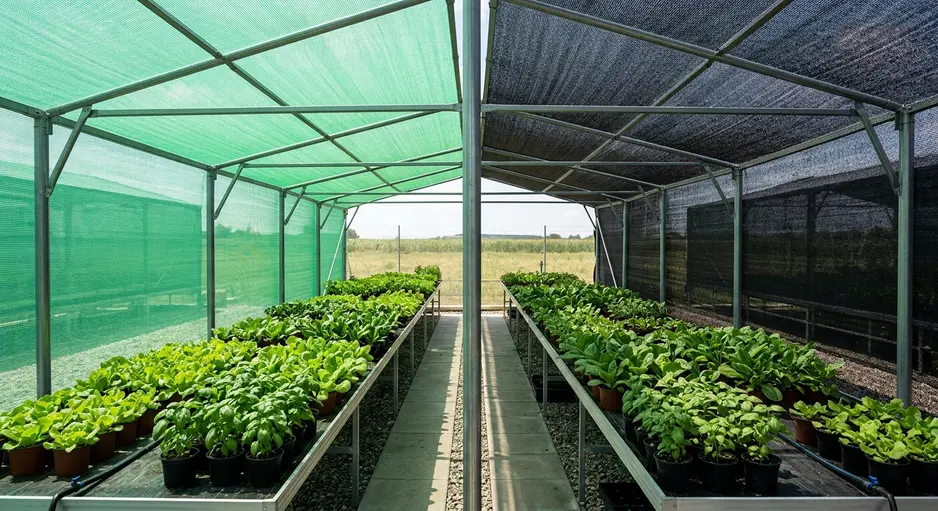
Both options may be made from UV-stabilized HDPE knitted fabric. They can also be supplied in several shade percentages. However, their spectral transmission, visual appearance and thermal behaviour may differ.
Nets of the same colour are not always equal. Yarn type, GSM, knitting density, UV additives and edge reinforcement can change performance. A well-made 50% net may offer more consistent coverage than a poorly knitted product carrying the same shade rating.
Green Shade Net vs Black Shade Net Comparison
Typical Shading Effect
Green: Moderates sunlight, but the exact effect depends on the tested shade factor.
Black: Provides broad sunlight reduction across the visible spectrum and is often chosen for dependable glare control.
Light Quality
Green: May alter the balance of transmitted wavelengths. A standard green product should not be treated as a tested photoselective net.
Black: Usually reduces wavelengths more evenly, with less intentional spectral manipulation.
Heat Behaviour
Green: Can reduce solar stress when the shade density and ventilation suit the site.
Black: The fabric may become warm because it absorbs radiation, yet it still prevents part of that energy from reaching the crop.
Common Uses
Green: Nursery shade, gardens, ornamental plants and horticultural work areas.
Black: Agricultural structures, greenhouse shading, seasonal crop protection and high-radiation sites.
Appearance
Green: Blends with plants and landscaped areas.
Black: Has a darker, more functional appearance.
The Most Important Difference Is Not Always Colour
A 50% green net and a 50% black net are both intended to block about half of incoming light under stated test conditions. Their transmitted light may differ, but the shade percentage remains the first specification to compare.
For example, a 50% black net may be safer than a 75% green net for a sun-loving crop. The higher-density option could remove too much useful light. Start with crop needs, and then compare colour, material and construction.
How Do Shade Nets Affect Sunlight and Plant Growth?
Shade Percentage and Sunlight Reduction
The shade percentage describes the approximate amount of light blocked by the net. A 30% product allows more light through than a 75% product. The following ranges offer a simple guide:
- 30% shade: Light protection for crops that still need strong sunlight.
- 50% shade: Moderate protection for many nursery and seasonal growing uses.
- 75% shade: Heavier coverage for shade-tolerant plants and selected propagation areas.
- 90% shade: Very dense coverage, often better suited to people, livestock or special plant uses.
Actual sunlight reduction can change after installation. Dust, stretching, ageing and the angle of the sun all affect field results. For an important crop, check light beneath the net instead of relying only on the label.
Light Diffusion and Crop Growth
Well-distributed light can reach deeper into a plant canopy and reduce exposure to harsh midday radiation. However, colour alone does not guarantee better light diffusion or crop growth.
Growers should consider photosynthetically active radiation, or PAR, which is the light plants use for photosynthesis. Daily light integral measures how much useful light a crop receives over a full day. Too little can cause weak stems, slow growth or delayed flowering.
Research into coloured shade netting shows that specially designed photoselective products may influence plant responses. Generic coloured netting should not receive the same performance claims unless test data confirms them.
UV Protection and UV-Stabilized Material
UV stabilization protects the net itself from damage caused by sunlight. UV blocking or transmission describes how much ultraviolet radiation passes through it. These terms are not interchangeable.
When buying a UV stabilized shade net, ask for technical details about both durability and radiation transmission. Do not assume that a UV-stabilized product blocks all UV rays.
Which Net Provides Better Temperature Control?
Does Black Shade Net Make Plants Hotter?
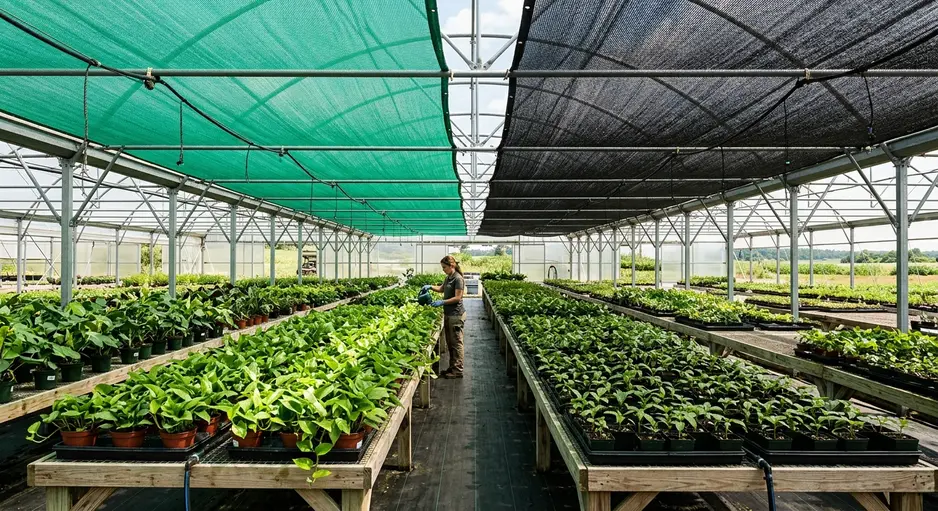
Black material generally absorbs more solar energy and may feel hot to the touch. This does not mean the plant canopy below it will automatically become hotter. The fabric also blocks radiation that would otherwise reach leaves and soil.
Crop-level temperature depends on several connected factors:
- Whether the net is inside or outside a structure
- The distance between the fabric and plants
- Airflow and greenhouse ventilation
- Shade percentage and knitting density
- Humidity and local weather
- Heat released by surrounding surfaces
A black shade net for farming can reduce leaf stress when it is properly selected and installed. Problems are more likely when dense material is placed too close to plants or used in an area with poor ventilation.
Heat Reduction Under Green Netting
A green shade net for farming can lower the solar load reaching a crop and may help limit leaf scorch. Still, it is not always cooler than a black option with the same shade factor.
The same net can perform well in an open nursery but trap heat in a closed, poorly ventilated structure. Air space and wind movement are central to effective temperature control.
External vs Internal Greenhouse Shading
External shading intercepts solar energy before it enters a greenhouse. It can therefore provide effective heat reduction. Internal shading is often easier to operate, but absorbed energy may remain within the structure.
Leave enough space for air movement and maintain roof or side ventilation. External installations must also account for wind load, secure attachment and structural capacity. The net and support system should never collect large pools of water.
Which Shade Net Is Best for Different Crops?
Green Netting for Nurseries and Horticulture
A green nursery shade net is common where the structure should blend with surrounding plants. Potential applications include seedling nurseries, foliage plants, ornamental crops, garden centres, hardening areas and horticultural workspaces.
Appearance should not replace crop testing. Use a light meter where practical, or begin with a small trial. Watch plant colour, stem length, leaf temperature and growth rate before covering a large production area.
Black Netting for Farming and Crop Protection
A black agricultural shade net is often used where broad, consistent sunlight reduction is the main aim. Common applications include vegetable plots during intense summer weather, open-field structures, greenhouse exteriors and temporary crop protection areas.
It is also used for worker or livestock shade, subject to suitable construction and installation. For crop use, select a verified shade factor rather than choosing black netting simply because it looks denser.
Practical Starting Points
The ideal level varies with crop species, growth stage, season and local daily light conditions. These ranges are starting points rather than universal rules:
- Sun-loving vegetables: Often 20% to 40% seasonal shade in very bright conditions.
- Leafy greens and young plants: Often 30% to 50% shade.
- Shade-tolerant ornamentals: Often 50% to 75% shade.
- Propagation plants: Requirements vary and may call for denser coverage.
Excessive shade can lead to stretching, thin stems, delayed flowering and reduced yields. Seek local agronomic guidance for high-value crops or unusual climates.
How to Choose the Right Shade Net
Use This Five-Step Selection Process
- Identify the crop’s light needs. Consider the species, growth stage and tolerance for intense sunlight.
- Assess the climate and season. Review summer temperatures, radiation, humidity and wind exposure.
- Choose shade percentage first. Decide how much sunlight reduction is needed before comparing colours.
- Check material and construction. Look for UV-stabilized HDPE, even knitting and reinforced edges.
- Run a field trial. Compare wilting, leaf temperature, internode length, flowering, yield and quality.
Monofilament Yarn vs Tape Yarn
Monofilament yarn consists of individual strands and is often selected where strength and open airflow matter. Tape yarn uses flat strands and may provide different weight, flexibility and coverage characteristics.
Neither construction is automatically better. Review tear resistance, GSM, knitting pattern and intended service conditions. A supplier’s technical data is more useful than a broad claim based on yarn type alone.
Measure Plant Results
Air temperature is only one measure of success. Monitor light or PAR below the crop shade net, leaf temperature, soil moisture, irrigation frequency, plant stretching and final yield. These results show whether the selected product is helping the crop.
Buying and Installation Checklist
What to Check Before Buying
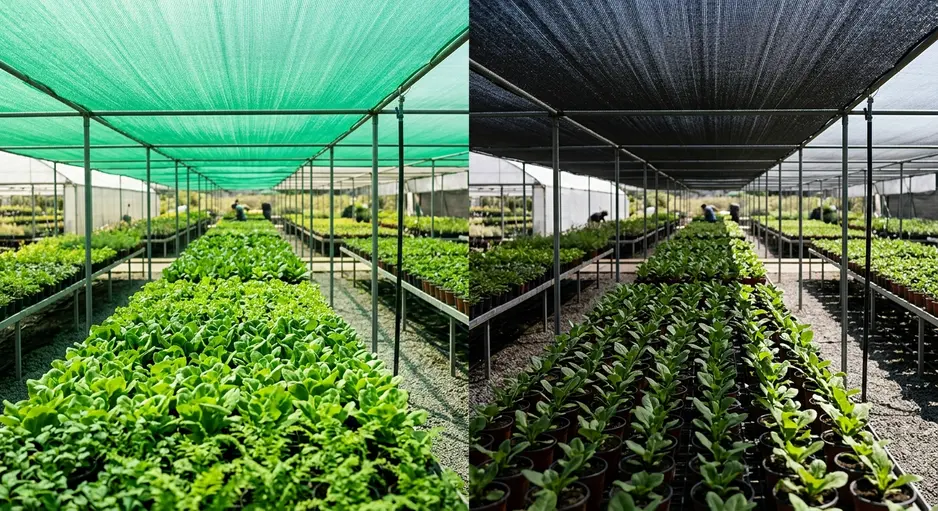
- Verified shade percentage and tolerance
- UV stabilization and written service-life guidance
- HDPE knitted fabric quality
- GSM or product weight
- Net width, length and total dimensions
- Yarn type and knitting pattern
- Reinforced edges and suitable eyelets
- Tear resistance and wind suitability
- Product warranty terms
- Manufacturer quality-control information
Installation Best Practices
Support the garden shade net evenly to limit sagging. Avoid excessive tension because stretching may change the openings and effective shade factor. Leave space above plants so warm air can move away.
Use corrosion-resistant fasteners and support cables suited to the expected load. Inspect edges and attachment points after strong winds. Where practical, remove dust that may reduce light transmission.
Growers planning a bulk or project order can compare available green and black net specifications with Shadoflex. Request technical data, product samples and guidance based on crop, climate and installation conditions before making a final choice.
Explore Green Shade Net & Black Shade Net
Conclusion
In the green shade net vs black shade net decision, black is commonly selected for broad sunlight reduction, while green is popular in nurseries, gardens and horticultural settings. Neither colour is the best choice for every plant.
Focus first on shade percentage, UV stabilization, knitting quality, ventilation and crop requirements. Check product data and test a small area when plant performance affects commercial results. To plan a larger installation, compare Shadoflex options and request guidance based on your crop, climate and required level of protection.
Frequently Asked Questions
1. Which Is Better, Green or Black Shade Net?
Neither is universally better. Green is popular in nurseries, gardens and landscaped areas, while black is widely used for broad sunlight control. Choose according to the required shade percentage, crop light needs, climate, ventilation and verified product specifications.
2. Does Black Shade Net Absorb More Heat?
Black fabric generally absorbs more solar energy and can become warm. It also stops part of that energy from reaching plants. Net position, airflow, density and distance from the canopy determine whether crop temperature rises or falls.
3. Is Green Shade Net Good for Vegetable Plants?
It can be suitable when the shade percentage matches the vegetable and season. Light-demanding plants may produce fewer flowers or fruits under dense shade. Start with moderate seasonal coverage and assess crop response.
4. What Percentage Shade Net Is Best for Plants?
There is no single best percentage. Many vegetables use light to moderate shade during intense weather. Young plants, leafy crops and shade-tolerant ornamentals may need more. Local climate and crop stage should guide the decision.
5. Can Shade Net Be Used as a Greenhouse Covering?
A greenhouse shade net can be installed over or inside a structure for supplemental shading. It does not normally replace weatherproof greenhouse film or rigid panels because knitted netting does not provide the same protection from rain or cold.