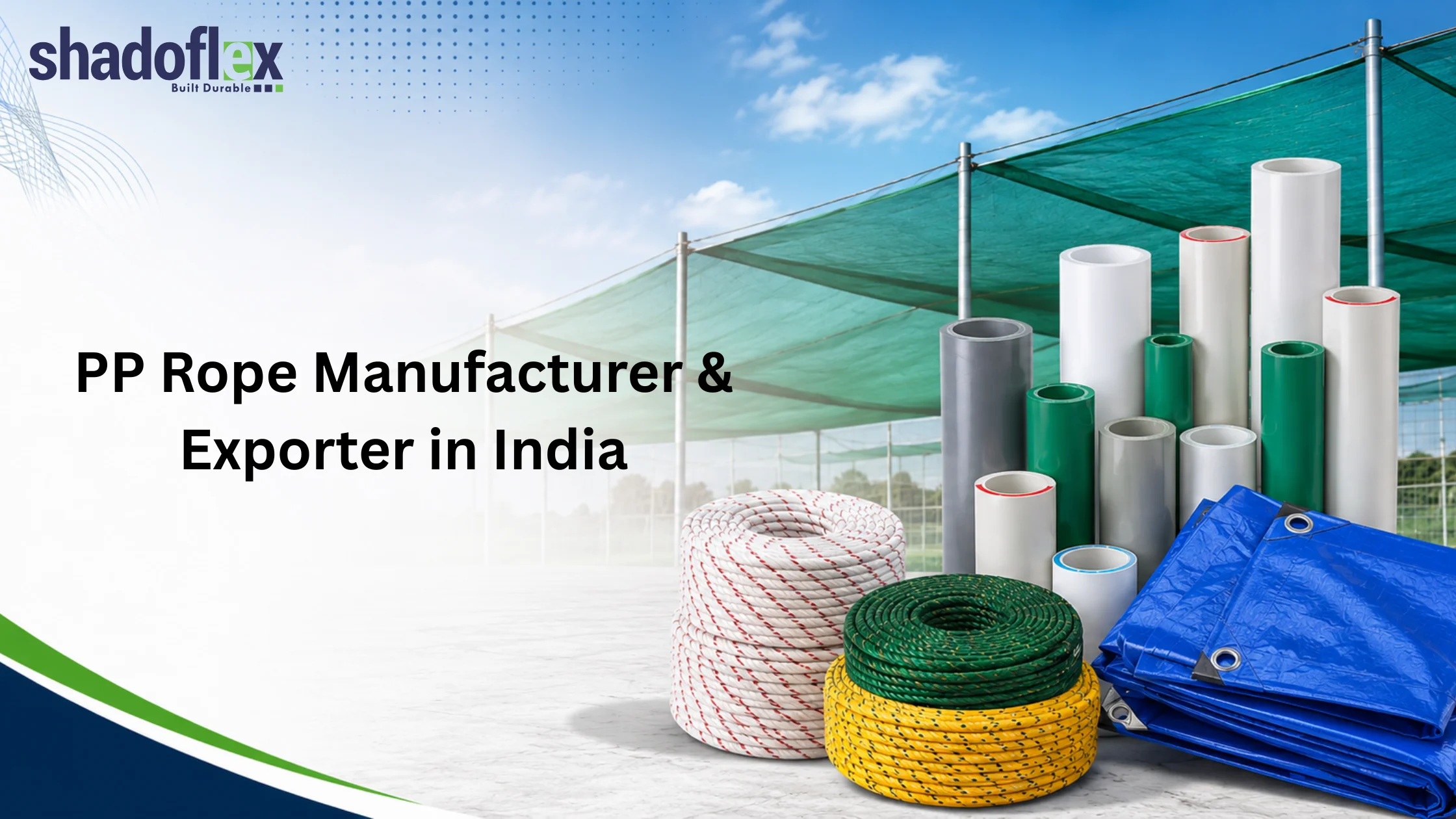
Choosing the right rope involves more than selecting a size or color. Buyers must consider its construction, breaking strength, flexibility, exposure conditions, and intended use. These factors affect handling, performance, and service life.
PP rope is a lightweight synthetic rope used in agriculture, marine work, packaging, construction, and general industrial tasks. It is valued for low water absorption, easy handling, and its ability to float. This guide explains how to compare products and evaluate a dependable PP rope manufacturer in India. Buyers interested in Shadoflex can also use these points when discussing specifications, samples, packaging, and order requirements.
What Is PP Rope and Why Is It Widely Used?
Understanding Polypropylene Material
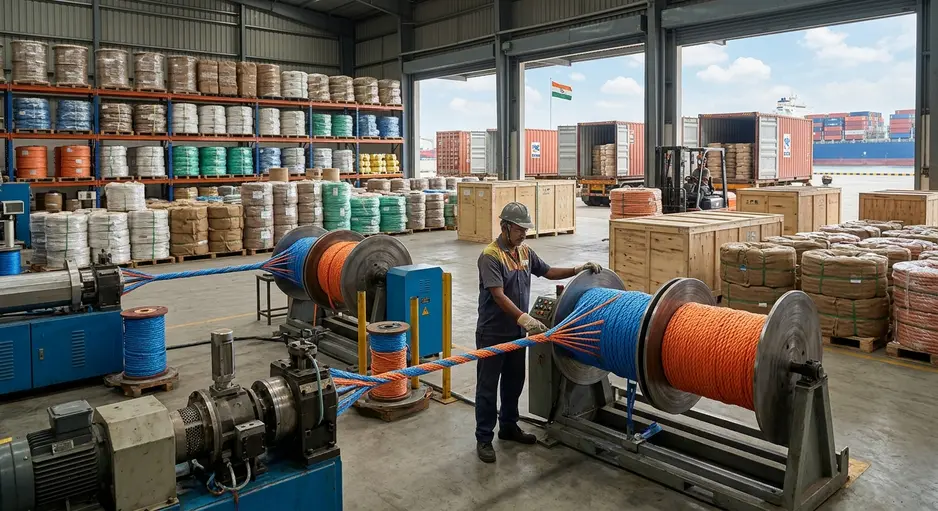
PP rope is made from polypropylene material formed into fibers, tapes, or filaments. These elements are then twisted or braided to create the finished rope. The production method affects its surface, flexibility, handling, and resistance to wear.
Not every rope of the same diameter offers the same performance. Raw-material grade, strand consistency, construction, and production control can all affect tensile strength and breaking force. Buyers should therefore compare technical data rather than make a choice based on appearance alone.
Lightweight, Water-Resistant, and Floating Properties
Polypropylene has a lower specific gravity than water. As a result, PP rope generally floats. This feature is useful for marker lines, fishing-related work, pool boundaries, and other applications where a visible or retrievable floating rope is needed.
It also absorbs very little water, making it easy to handle in wet conditions. Its low weight can simplify storage, transport, and routine use. Polypropylene resists many commonly encountered chemicals, although suitability must always be checked for the exact chemical, concentration, temperature, and exposure time.
Is PP Rope UV and Abrasion Resistant?
Outdoor durability depends on the formulation. A UV resistant rope may contain stabilizers that slow damage caused by sunlight, but no rope should be treated as fully UV-proof. Color, exposure time, climate, load, and storage conditions can influence service life.
Abrasion resistance also varies by construction and use. Grit, sharp edges, rough concrete, and repeated friction can damage a durable synthetic rope. Contact points should be inspected often, and suitable guards should be used where practical.
Braided PP Rope vs Twisted PP Rope
Twisted Construction
Twisted PP rope is made by forming fibers or tapes into strands and twisting those strands together. It is widely used for agricultural work, packaging, marine utility lines, and general-purpose tying.
This construction is often economical for bulk requirements. Certain twisted designs can also be spliced with suitable methods. However, the rope may rotate, kink, or untwist under some loading conditions. Its behavior depends on the strand design and manufacturing consistency.
Braided Construction
Braided PP rope uses interwoven yarns or strands. Its braided construction often creates a smoother surface and controlled feel during handling. It may also have a lower tendency to unravel than some twisted designs when properly finished.
This option can suit applications where rope flexibility, clean appearance, and frequent manual handling matter. The exact performance still depends on the braid pattern, material grade, diameter, and production process.
Which Construction Should Buyers Choose?
- Flexibility: Braided rope often feels smoother and more flexible, although the exact design matters.
- Handling: A braid may offer controlled handling, while twisted rope is familiar and practical for many utility tasks.
- Splicing: Some twisted constructions are easier to splice with the correct method.
- Abrasion behavior: Both types can wear against rough surfaces. Compare test data and actual operating conditions.
- Common uses: Twisted rope is common in bulk utility work. Braided rope can suit jobs needing a cleaner finish.
- Relative cost: Pricing depends on material, size, design, order quantity, testing, and packaging.
Is braided PP rope stronger than twisted PP rope? Not always. Construction alone does not determine strength. Buyers should compare rope diameter, material grade, strand count, elongation, test method, and minimum breaking force.
Where Is Polypropylene Rope Used?
PP Rope for Agriculture
PP rope for agriculture may be used for crop support, trellising, boundary marking, bundling, and routine farm work. A grower choosing rope for seasonal trellising should consider sunlight exposure, knot performance, tension retention, and whether the rope will be reused.
Outdoor farm conditions can include moisture, dust, heat, chemicals, and rough contact points. The selected product should match the expected season and maintenance plan.
PP Rope for Marine Applications
Common uses include marker lines, pool boundaries, utility lines, and selected fishing or aquaculture tasks. Its floating behavior and low water absorption are useful in wet areas. It may also be easier to locate and retrieve from the water than a sinking rope.
Marine conditions can expose rope to salt, grit, sunlight, shock loads, and abrasion. Mooring or towing work requires application-specific assessment. A general-purpose product should not be assumed suitable for a critical marine operation.
Packaging and Material Handling
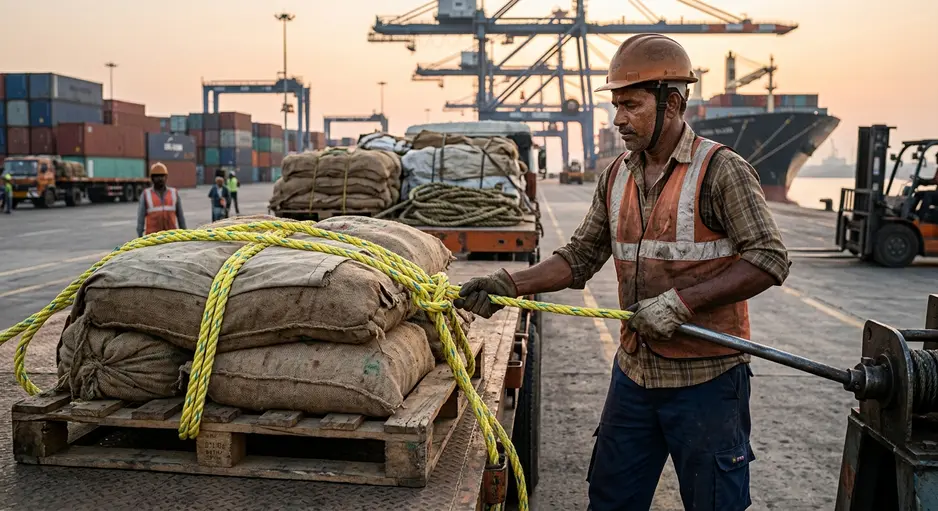
PP rope for packaging can support carton tying, bale bundling, warehouse tasks, and the securing of non-critical goods. It may also be used to bundle pipes, timber, or packaged materials when the load and transport method permit it.
Buyers should check knot security, required length, coil format, and expected tension. Sharp corners can cut or weaken rope, so edge protection may be needed.
Construction, Industrial, and General Use
PP rope for construction is commonly considered for temporary barriers, site marking, material bundling, and utility tasks. PP rope for industrial applications may also support warehousing, transport, manufacturing, events, and crowd-control lines.
Standard rope is not automatically suitable for fall arrest, personnel lifting, scaffolding safety systems, or critical overhead lifting. These tasks require products designed, tested, certified, and approved for the specific purpose.
How Do You Choose the Right PP Rope?
Select the Correct Rope Diameter
Rope diameter affects handling and strength, but it should not be the only selection factor. The rope must also fit the intended pulleys, guides, knots, fittings, and connection points. A product data sheet should state the nominal size, tolerance, and measurement method.
A thicker rope is not automatically safe for every task. Construction, material consistency, wear, and loading method also affect performance.
Compare Breaking Strength and Working Load
Breaking strength is the force at which a new rope fails under stated test conditions. Working load is the allowable load during service after an appropriate safety factor has been applied. The two figures must not be used interchangeably.
Knots, splices, shock loading, abrasion, heat, chemical contact, and prior use can reduce capacity. Safe limits should reflect the application, relevant rules, and guidance supplied with the product.
Check Elongation, Flexibility, and the Environment
Tensile strength is important, but stretch behavior and flexibility also affect use. Excessive elongation may be unsuitable where precise positioning is needed. A stiff rope may be harder to knot or handle, while a highly flexible design may suit repeated manual work.
Before ordering, assess:
- Duration and intensity of outdoor UV exposure
- Freshwater, saltwater, or repeated wetting
- Rough surfaces and sharp edges
- Heat buildup and friction
- Chemical contact or contamination
- Static loading versus shock loading
- Required service life and inspection schedule
How strong is polypropylene rope? Strength varies with material grade, construction, diameter, and production quality. Request a tested minimum breaking force for the exact product rather than relying on a general value for the material.
How to Choose a PP Rope Manufacturer in India
Review Manufacturing and Quality Controls
A buyer evaluating a polypropylene rope manufacturer should ask how raw materials are specified and how product consistency is checked. Useful controls may include diameter measurement, strand inspection, batch identification, breaking-force testing, and final product checks.
Ask whether test equipment is calibrated and whether results can be linked to a production batch. Traceable records make it easier to investigate performance concerns and confirm that repeat orders match approved requirements.
Request Specifications and Test Reports
A clear technical data sheet should identify the rope construction, nominal diameter, length, weight, linear density, and minimum breaking force. Depending on the application, it may also state elongation, color, UV-stabilization options, packaging, and the test method used.
ISO 2307 provides methods for measuring certain rope properties and breaking force. ISO 1346 covers specified polypropylene rope constructions. Buyers should not assume compliance based on a product description; documented evidence should be requested when a standard is required.
Discuss Customization and Commercial Terms
Before selecting a polypropylene rope supplier, confirm which diameters, lengths, colors, and constructions are available. Ask about coil, spool, hank, or reel formats, as well as labeling and packing requirements. Minimum order quantity, lead time, sampling, and production capacity should also be agreed in writing.
Buyers considering Shadoflex can contact the company to discuss available specifications, customization, samples, order quantities, and quotations. Capabilities should be confirmed directly for the required product and destination.
What Should Importers Expect from a PP Rope Exporter?
Export Packaging and Labeling
A PP rope exporter should clarify how coils or reels will be protected during handling and shipping. Depending on the order, buyers may request product labels, batch references, barcodes, private labels, palletization, or moisture-resistant outer packaging.
Documents and Shipping Support
Documents may include a commercial invoice, packing list, certificate of origin, test certificate, bill of lading or airway bill, and required export declarations. The exact list depends on the shipment, destination, contract, and local rules.
Before placing a bulk order with a polypropylene rope exporter, ask:
- What is the minimum order quantity?
- Are samples available for evaluation?
- Which Incoterms are offered?
- What is the expected production lead time?
- How is breaking force tested?
- Can size, color, length, labels, or packaging be customized?
- Is pre-shipment inspection available?
How do I find a reliable PP rope exporter from India? Compare specifications, test records, traceability, communication, packaging plans, and written commercial terms. Verify all required documents before production begins.
PP Rope Storage, Inspection, and Safe Use
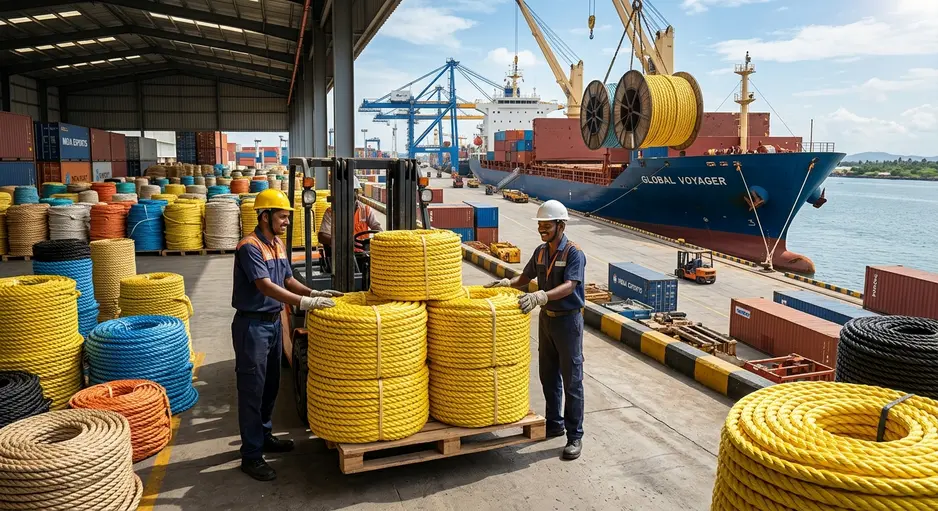
Store rope in a clean, dry area away from prolonged direct sunlight, strong heat sources, and incompatible chemicals. Avoid placing heavy materials on coils. Clean racks or reels can help prevent crushing, tangling, and contamination.
Before each use, inspect for cuts, broken strands, flattening, severe abrasion, discoloration, stiffness, heat glazing, melting, or chemical damage. Splices and terminations also need close checks.
Retire the rope if damage, contamination, heavy wear, or an uncertain loading history creates a safety concern. Do not use knots or improvised repairs to restore damaged rope for a safety-critical task.
PP Rope Manufacturer & Exporter in India
Choose PP Rope with Clear Technical Data
The right PP rope depends on its construction, diameter, breaking force, flexibility, operating environment, and safety needs. Transparent specifications and relevant test documents help buyers compare products and avoid unsuitable choices.
Looking for a PP rope manufacturer or polypropylene rope exporter in India? Contact Shadoflex to discuss the required construction, diameter, length, application, packaging, quantity, and destination. Confirm product capabilities and technical requirements directly before ordering.
Frequently Asked Questions About PP Rope
1. Is PP rope waterproof?
Polypropylene absorbs very little water and performs well in wet settings. However, “waterproof” does not mean it is unaffected by sunlight, grit, abrasion, contamination, or long service. The rope should still be inspected and stored correctly.
2. Is PP rope suitable for outdoor use?
It can be used outdoors, especially when suitable UV stabilization is included. Service life depends on sunlight, temperature, color, load, abrasion, weather, and storage. Ask the supplier for details that apply to the intended environment.
3. Which is better: braided or twisted PP rope?
Neither type is best for every job. Braided rope often provides smooth handling and a clean finish. Twisted rope is practical, economical, and may be easier to splice. Select by tested performance and application needs.
4. What PP rope diameters are available?
Available sizes vary by design and manufacturer. Request a current size chart showing nominal diameter, tolerance, weight per unit length, construction, and minimum breaking force for each option. Explore further
5. Can PP rope be used for lifting?
General-purpose PP rope should not be used for personnel lifting, fall arrest, or critical overhead lifting. Such work requires a product specifically engineered, tested, certified, and approved for the intended lifting system.