Worker safety is not optional on modern construction sites. With India’s fast-growing infrastructure sector and stricter compliance norms, choosing the right protective net can directly impact safety, legal liability, and project timelines. Yet many contractors still struggle with the difference between a safety net vs construction net.
At first glance, both may look similar. Both are installed on scaffolding and high-rise structures. Both protect workers and the public. But their purpose, material strength, and compliance requirements are very different. Choosing the wrong one can increase risk and even violate safety regulations.
This detailed safety net vs construction net comparison will help builders, tile manufacturers, contractors, and project managers understand what works best for their needs. Whether you are sourcing from safety net suppliers India or evaluating construction net manufacturers India, this guide will help you make an informed decision.
What Is a Safety Net?
Definition and Primary Purpose
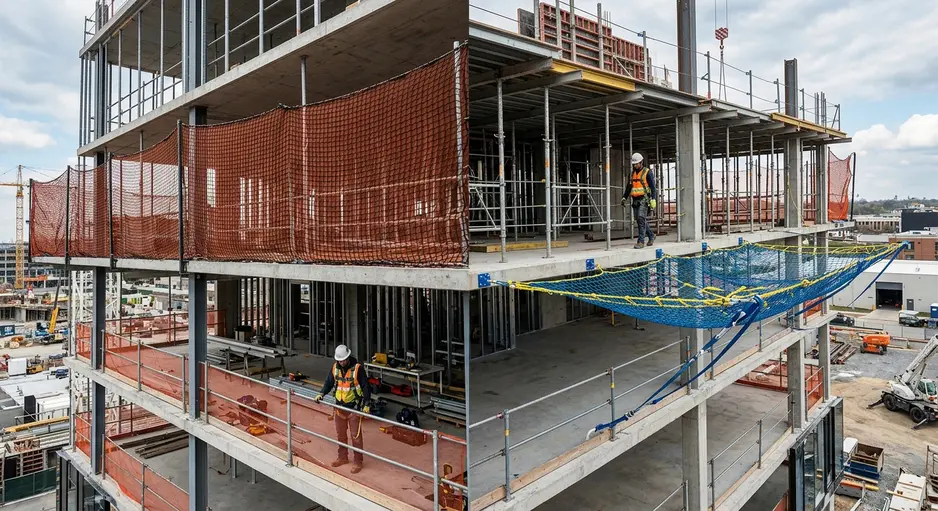
A safety net is a fall arrest system designed to catch workers if they slip or fall from height. It reduces the impact of a fall and prevents serious injury or death. These nets are commonly used in high-rise and multi-storey construction projects.
Anti-fall safety nets for workers are installed beneath work areas, around edges, and near open shafts. They are critical in projects where workers operate at significant heights.
- Fall arrest safety net for high-rise buildings
- Edge protection netting for elevated platforms
- Best safety net for multi-storey construction sites
Materials Used in Safety Nets
Most safety nets are made from nylon and polypropylene safety nets materials. A polypropylene safety net for fall protection is widely preferred due to its strength, flexibility, and weather resistance.
Key characteristics include:
- High tensile strength
- Shock absorption capacity
- Strong knot design
- Load-bearing capability
These nets are engineered to handle dynamic loads, unlike debris nets which are not meant for human impact.
Common Applications
Safety nets are used in multiple sectors beyond standard construction.
- High-rise residential and commercial projects
- Industrial safety nets wholesale buyers
- Safety nets for ceramic tile factories
- Large infrastructure developments
In factories, they are installed under elevated work zones to protect workers from accidental falls.
Safety Net Standards in India
Safety net standards India require proper tensile strength, mesh configuration, and installation methods. Compliance with construction safety net installation and regulations India is essential.
Regular inspection, correct anchoring, and load testing are mandatory for fall arrest systems.
What Is a Construction Net?
Definition and Primary Purpose
A construction net is mainly used for debris containment and site protection. It prevents falling materials, dust, and tools from leaving the work zone.
Unlike safety nets, these are not designed to absorb the impact of a falling person.
- Debris netting for building sites
- Containment net for debris and tools
- Scaffold netting for construction
Materials and Design
Most construction site netting materials HDPE based products are lightweight yet durable. An HDPE construction net for scaffolding is commonly used because it resists tearing and withstands outdoor exposure.
Important design features include:
- UV stabilized construction nets for outdoor projects
- Controlled scaffold safety net mesh size and design
- Breathable yet protective weave
The mesh size is smaller compared to fall arrest nets, as it must stop debris rather than catch a person.
Common Applications
Construction nets are widely used across building sites and manufacturing facilities.
- Debris containment net for tile installers and masonry
- Protective netting for tile installation
- Mesh net for masonry and ceramic tiles
They also serve as visual barriers around scaffolding and reduce dust spread in urban projects.
Safety Net vs Construction Net Comparison
Key Differences at a Glance
- Purpose: Fall arrest vs debris containment
- Material Strength: High tensile load-bearing vs lightweight HDPE
- Mesh Size: Larger shock-absorbing grid vs tight debris mesh
- Installation: Engineered anchoring system vs scaffold wrapping
- Regulations: Strict fall protection compliance vs general site safety norms
- Cost: Safety nets are usually higher due to strength requirements
Difference Between Safety Net and Construction Net for Builders
The difference between safety net and construction net for builders mainly lies in risk exposure. High-rise projects demand fall arrest systems. Low-rise or facade work may only require debris netting.
If workers operate above two floors without guardrails, a fall arrest net is strongly recommended. For plastering or tile work on scaffolds, debris netting may be sufficient.
When You Might Need Both
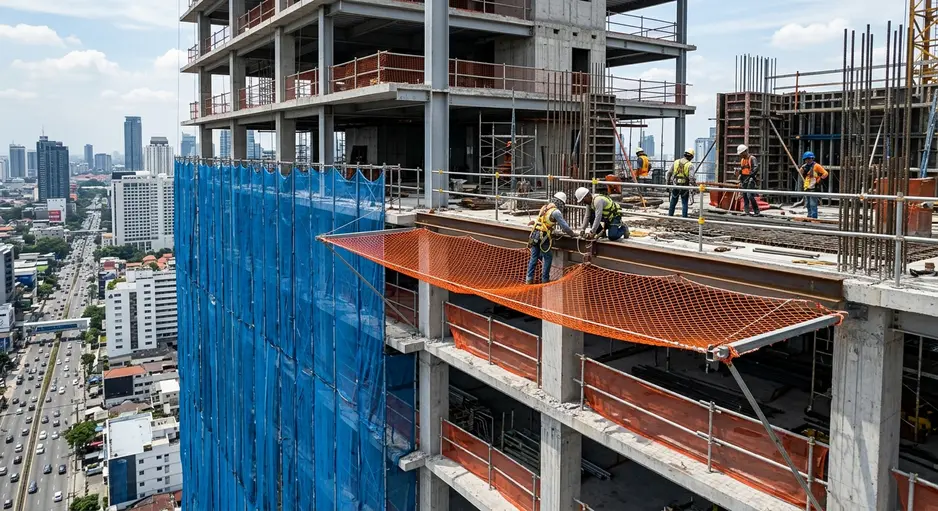
Large infrastructure and high-rise developments often require both systems.
- High-rise towers with external scaffolding
- Industrial plants
- Large ceramic tile factories
One net protects workers. The other protects pedestrians and nearby property.
Which One Is Better for Your Project?
Best Safety Net for Multi-Storey Construction Sites
For tall structures, choose a polypropylene safety net for fall protection with high load capacity and certified anchoring systems.
Look for:
- UV resistance
- Documented tensile strength
- Compliance with safety net standards India
- Proper edge reinforcement
Best Option for Tile Installers and Masonry Contractors
Tile installers and masonry contractors often prefer debris netting for building sites. It acts as a containment net for debris and tools, preventing broken tiles or materials from falling.
Bulk safety net purchase for tile manufacturers is common in large production facilities where elevated racks and work platforms exist.
Cost vs Safety: What Should Contractors Prioritize?
Cost matters, but safety failures cost more in the long run. Accidents lead to medical claims, work stoppage, and legal penalties.
Professional contractors understand that investing in proper worksite safety netting suppliers reduces liability and improves project reputation.
Construction Safety Net Installation and Regulations in India
Installation Best Practices
- Secure anchoring to strong structural points
- Correct overlapping between sections
- Regular inspection for tears or slack
- Maintaining proper tension across the net
Poor installation can reduce effectiveness even if the material quality is high.
Compliance Guidelines
Construction safety net installation and regulations India require adherence to load capacity standards and safe mounting methods. Worker safety audits often include checking safety mesh for scaffolding and anti-fall systems.
Common Mistakes to Avoid
- Using debris net as a fall arrest safety net
- Incorrect scaffold safety net mesh size
- Weak anchoring points
- Ignoring UV degradation in outdoor projects
Buying Guide: Choosing Reliable Suppliers & Manufacturers
What to Look for in Safety Net Suppliers India
- Clear tensile strength specifications
- UV stabilization for outdoor use
- Quality-tested polypropylene materials
- Export-grade packaging standards
Reputed worksite safety netting suppliers provide technical documentation and installation guidance.
Construction Net Manufacturers India – Key Evaluation Criteria
- High-quality HDPE construction net for scaffolding
- Custom mesh size availability
- Bulk production capability
- Consistent product finish
Wholesale construction nets for contractors should be durable, lightweight, and easy to install.
Export Safety Nets from India
Export safety nets from India must meet international durability standards. Export-grade construction nets suppliers ensure proper packaging and logistics handling.
Manufacturers like Shadoflex offer HDPE and polypropylene netting solutions suitable for domestic and export markets, making them a trusted choice for contractors and industrial buyers.
Expert Insights: Real-World Case Examples

Case Study 1 – High-Rise Building in Mumbai
A multi-storey residential project installed fall arrest safety nets under every active slab. During construction, a worker slipped. The installed net absorbed the impact and prevented serious injury.
The contractor later reported improved compliance ratings and lower insurance concerns.
Case Study 2 – Ceramic Tile Factory in Gujarat
A tile manufacturer installed debris containment net and edge protection netting around elevated racks. Broken tiles and tools were safely contained.
The facility also opted for bulk safety net purchase for tile manufacturers to standardize safety across units.
Explore Safety Net & Construction Net
Conclusion
The debate around safety net vs construction net is not about which one is better overall. It is about choosing the right tool for the right job. Safety nets protect workers from falls. Construction nets contain debris and improve site cleanliness.
For high-rise and high-risk environments, fall arrest systems are essential. For masonry, tile work, and scaffolding, debris netting may be sufficient. Many large projects require both for complete protection.
Before making a decision, assess your risk level, compliance requirements, and long-term safety goals. Partnering with experienced manufacturers like Shadoflex ensures you get reliable HDPE and polypropylene netting solutions tailored to your project needs.
Invest in the right net today to build safer, stronger worksites tomorrow.
FAQs
1. What is the main difference between safety net and construction net?
A safety net is designed for fall protection, while a construction net mainly prevents debris from falling outside the work area.
2. Can construction net be used as a fall protection net?
No. Construction nets do not have the tensile strength required for fall arrest safety net applications.
3. What mesh size is best for scaffold safety netting?
For debris control, tighter mesh is preferred. For fall arrest, mesh size depends on load absorption design and regulatory standards.
4. Are safety nets mandatory for high-rise buildings in India?
In most high-rise projects, fall protection measures are mandatory under safety regulations, especially where workers operate at height.
5. Which material is better – HDPE or polypropylene safety nets?
Polypropylene is preferred for fall arrest systems. HDPE is widely used for debris netting and scaffold wrapping.