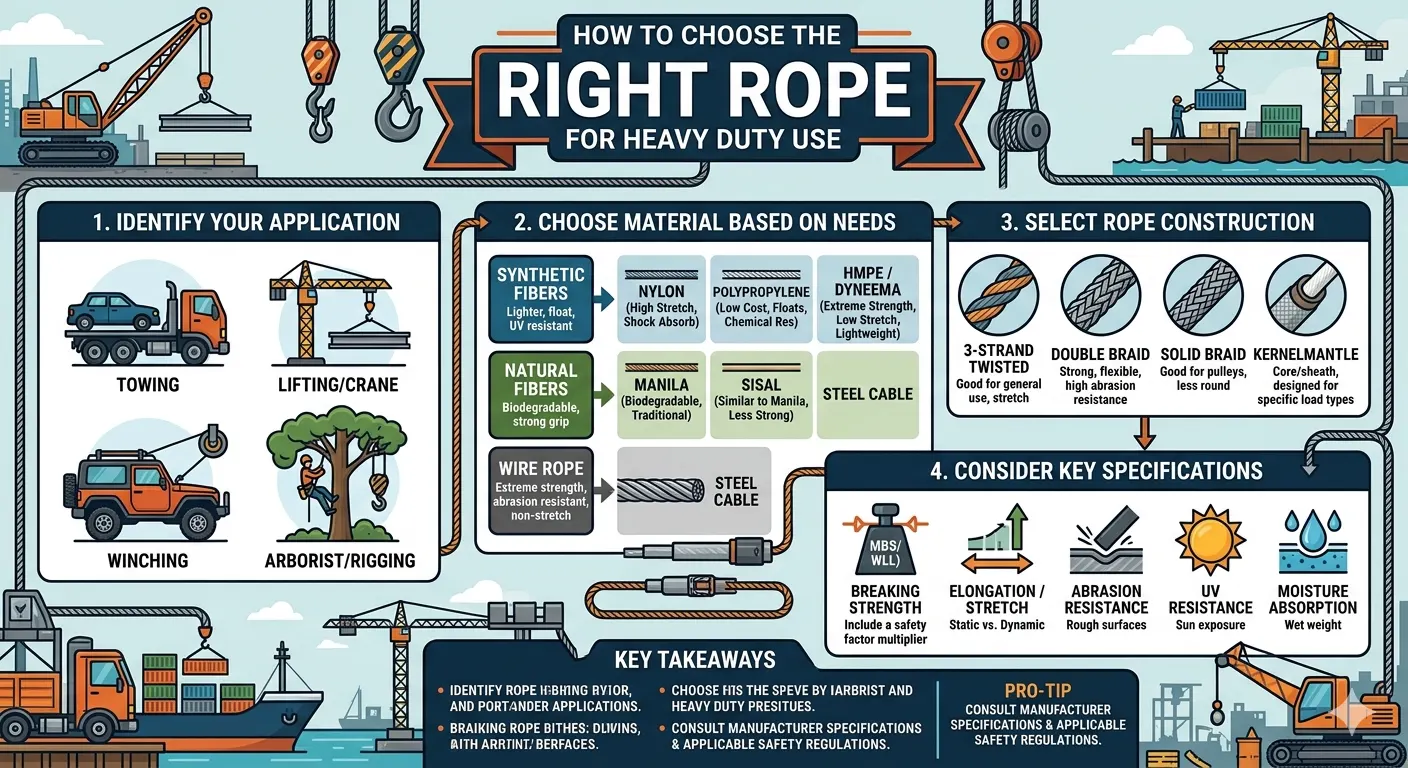
Choosing the right rope for heavy-duty use is important for safety, durability, and performance. Different industries such as construction, agriculture, transportation, marine, and industrial handling require ropes that can handle high loads and harsh working conditions.
Using the wrong type of rope can lead to wear, breakage, and operational risks. That is why understanding rope materials, strength, flexibility, and application requirements is essential before making a purchase.
Understand the Application Requirement
The first step in choosing a heavy-duty rope is identifying where and how the rope will be used. Different applications require different rope properties.
Common Heavy-Duty Applications
- Cargo securing
- Industrial lifting
- Construction work
- Agricultural operations
- Marine and fishing use
- Towing and pulling
- Warehouse handling
Outdoor applications may require UV-resistant and weatherproof ropes, while industrial lifting may require higher tensile strength.
Check Rope Material
The material of the rope directly affects its strength, flexibility, durability, and resistance to environmental conditions.
Popular Rope Materials
HDPE Rope
HDPE ropes are lightweight, durable, and resistant to moisture and chemicals. They are commonly used in agriculture, transportation, and industrial applications.
PP Rope
Polypropylene ropes are affordable, lightweight, and suitable for general heavy-duty applications.
Nylon Rope
Nylon ropes offer excellent strength and shock absorption, making them suitable for lifting and towing.
Polyester Rope
Polyester ropes provide strong UV resistance and maintain durability in outdoor environments.
Consider Rope Strength and Load Capacity
Load capacity is one of the most important factors when selecting a rope for heavy-duty use. Every rope has a specific working load limit that determines how much weight it can safely handle.
Always choose a rope with a higher load capacity than the expected working weight to improve safety and durability.
Important Strength Factors
- Tensile strength
- Breaking strength
- Working load limit
- Impact resistance
Using undersized ropes for heavy applications can increase the risk of failure.
Evaluate Weather and Environmental Resistance
Heavy-duty ropes are often exposed to sunlight, rain, moisture, chemicals, and rough surfaces. Choosing a rope with good environmental resistance helps improve lifespan and performance.
Features to Look For
- UV resistance
- Water resistance
- Abrasion resistance
- Chemical resistance
- Heat resistance
Outdoor and industrial environments usually require stronger protective properties.
Choose a Reliable Rope Manufacturer
Product quality plays a major role in rope performance and safety. Always choose ropes from trusted manufacturers that follow quality standards and provide durable industrial-grade products.
Reliable manufacturers often offer:
- Better material quality
- Consistent strength
- Custom rope sizes
- Bulk supply support
- Industrial application solutions
Conclusion
Choosing the right rope for heavy-duty use depends on material type, strength, environmental resistance, flexibility, and application needs. HDPE, PP, nylon, and polyester ropes all offer different advantages for industrial and commercial use.
Understanding your working conditions and selecting high-quality ropes from a trusted manufacturer helps ensure better safety, durability, and long-term performance.